
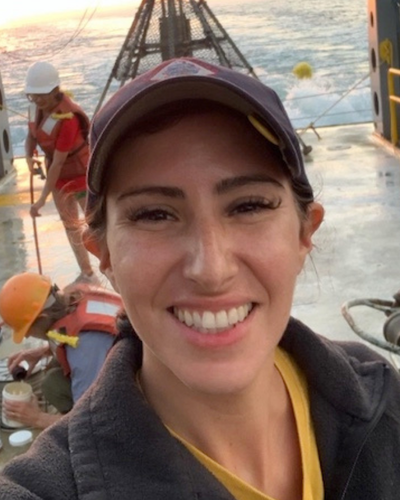
C. Shuster is an environmental scientist and interdisciplinary researcher working at the intersection of ecology, warfare, geospatial science, and environmental justice. Her work asks a deceptively simple question: what happens to landscapes, bodies, and cultures after violence is declared “over”? The answer, she argues, is that very little truly disappears. She conducts long-term geospatial analyses of tidal marsh change, vegetation zone shifts, and landscape transformation in Northern Mission Bay, California. Using historical maps, aerial imagery, LiDAR-derived elevation models, and GIS-based spatial statistics, she reconstructs how coastal wetlands have been reshaped by development, hydrological modification, and climate-driven processes over more than a century.
Alongside her coastal ecology research, Shuster investigates the environmental legacies of warfare, particularly heavy metal contamination, explosive residues, and the geological persistence of military pollutants in soils and sediments. Her award-winning research on Iwo Jima demonstrates how World War II-era military activity continues to structure present-day contamination patterns in volcanic sands nearly eighty years later, with implications for environmental health, remediation, and future military policy.